
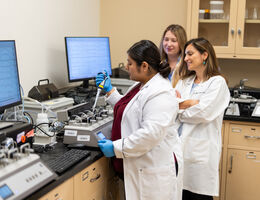
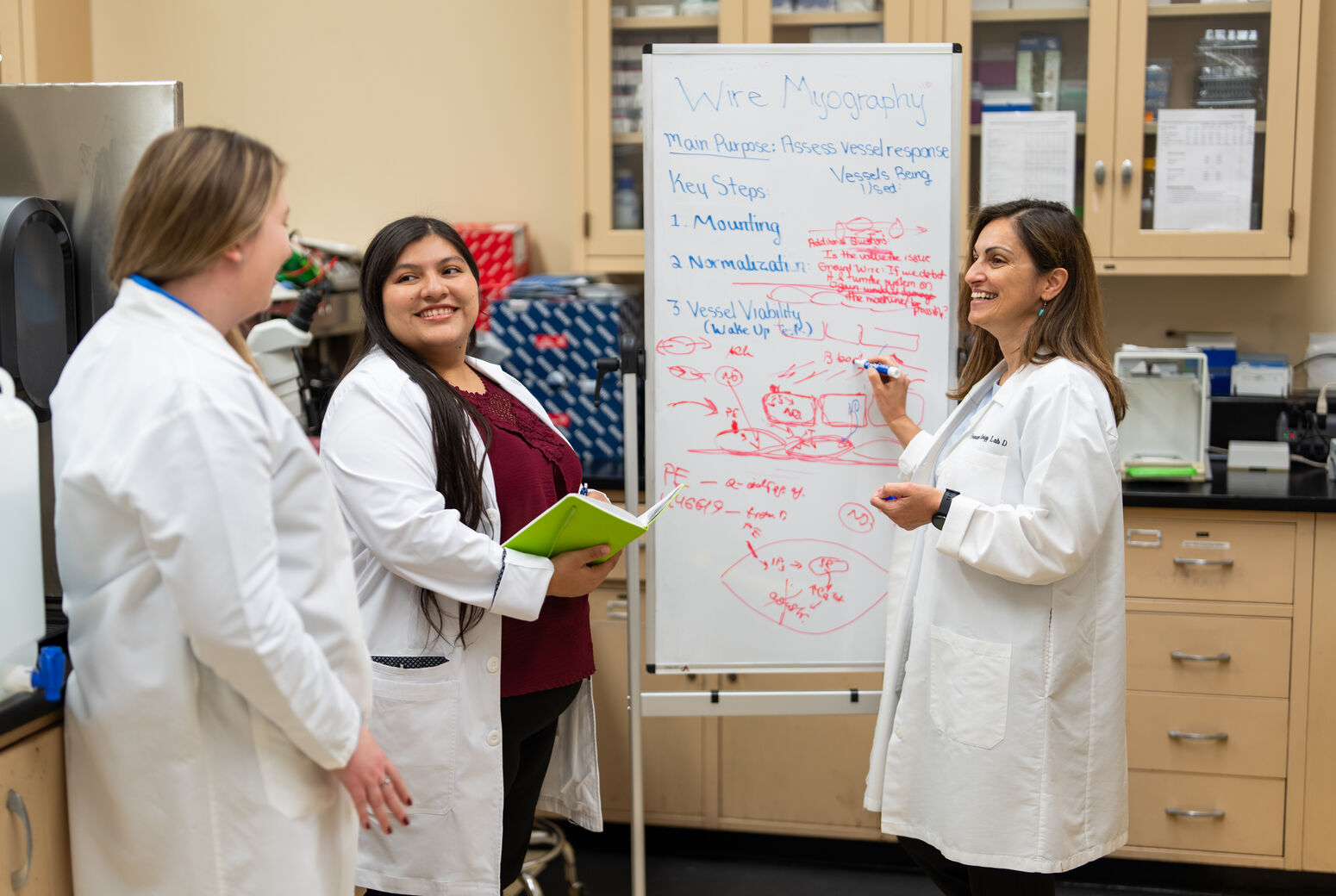
The Goulopoulou Lab at Loma Linda University School of Medicine studies the mechanisms that govern vascular resilience, adaptation, and vulnerability in women’s health. We investigate how blood vessels respond to physiological and pathological stress, focusing on the interplay among inflammation, mitochondrial stress signaling, and vascular function. We use pregnancy as a model of remarkable cardiovascular adaptation and preeclampsia as a model of vascular vulnerability to understand why some individuals remain healthy while others develop disease. By integrating molecular, preclinical, and clinical research, we aim to identify mechanisms that inform strategies for early detection, prevention, and treatment that improve women’s cardiovascular health across the lifespan.
The Goulopoulou Lab's mission is to advance women’s cardiovascular health across the lifespan through innovative, translational, and collaborative research that spans molecules to human studies, with a commitment to improving outcomes for all women.
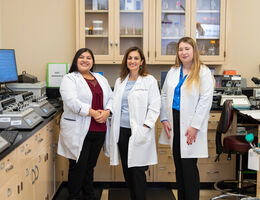
Meet the Team
Get to know Dr. Goulopoulou and her staff and students doing groundbreaking research.
Learn more
Join the Lab
Seeking motivated undergraduates, graduates, post-doctoral fellows, and other collaborators.
Learn more


Lab News
ATVB Cover Feature
Our invited review was selected for the cover of Arteriosclerosis, Thrombosis, and Vascular Biology! We are honored to have our work highlighted by the journal and excited to share our perspective on the remarkable adaptations of the uteroplacental circulation and their role in healthy pregnancy and preeclampsia.
International Symposium – University of Gothenburg, Sweden
Dr. Goulopoulou was invited to present our research at the International Symposium on Pregnancy and Neonatal Health at the University of Gothenburg, Sweden. It was a wonderful opportunity to exchange ideas with colleagues from around the world and share our latest discoveries on “Innate immune activation in pregnancy: maternal organ-specific inflammation and vascular dysfunction”.
Editorial Published
Our editorial on vascular plasticity and resilience is now published! We are excited to contribute to this important conversation and highlight how understanding vascular adaptation can inspire new approaches to cardiovascular health in women and beyond. With lab alumnus, Selina Tucker!
Citation: Goulopoulou S, Tucker SM. What men’s vessels can learn from women’s: redefining vascular homeostasis through the lens of female reproductive history. Am J Physiol Heart Circ Physiol. 2026 May 11;330(6):H1929-H1932. doi: 10.1152/ajpheart.00984.2025
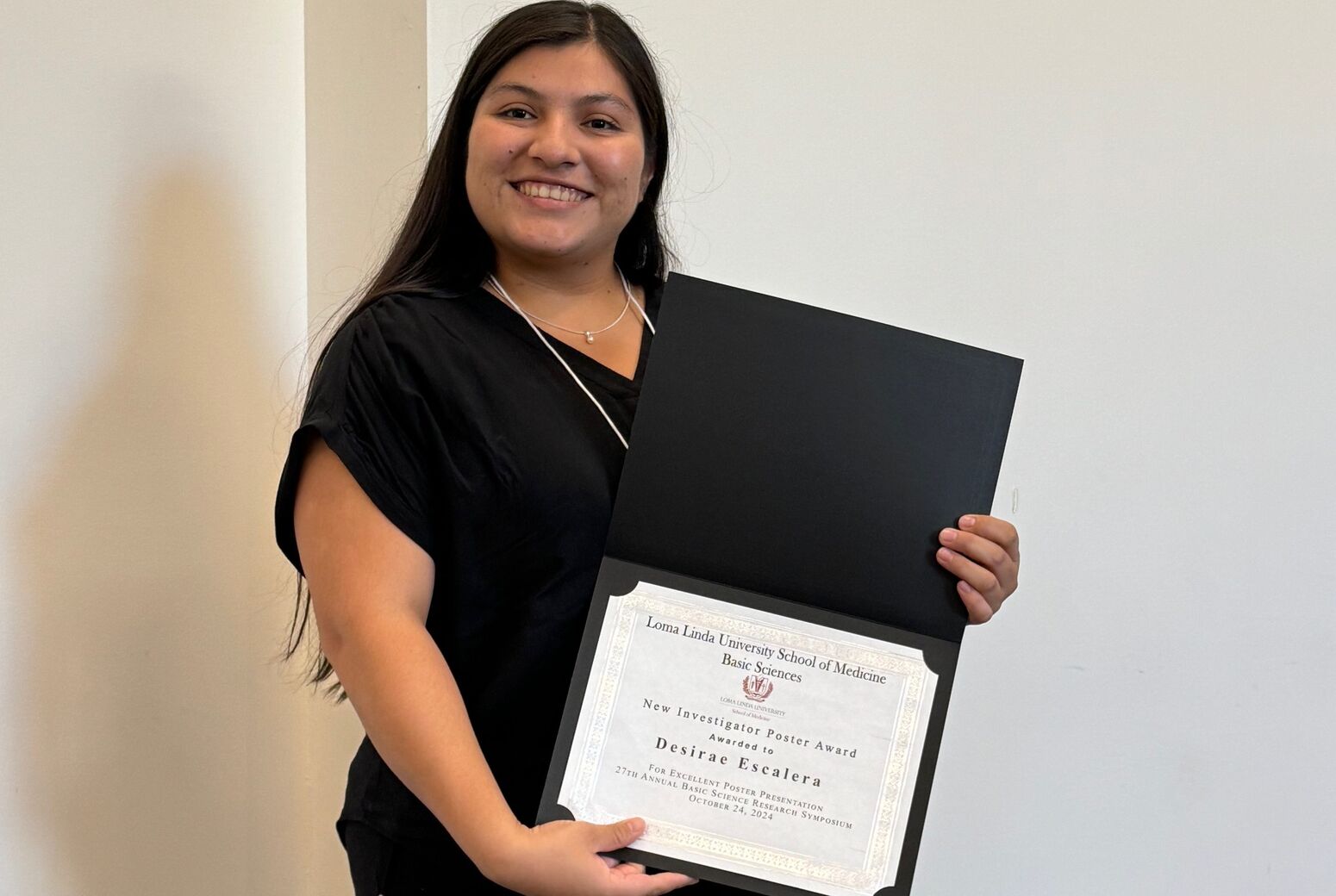
Congratulations, Desirae!
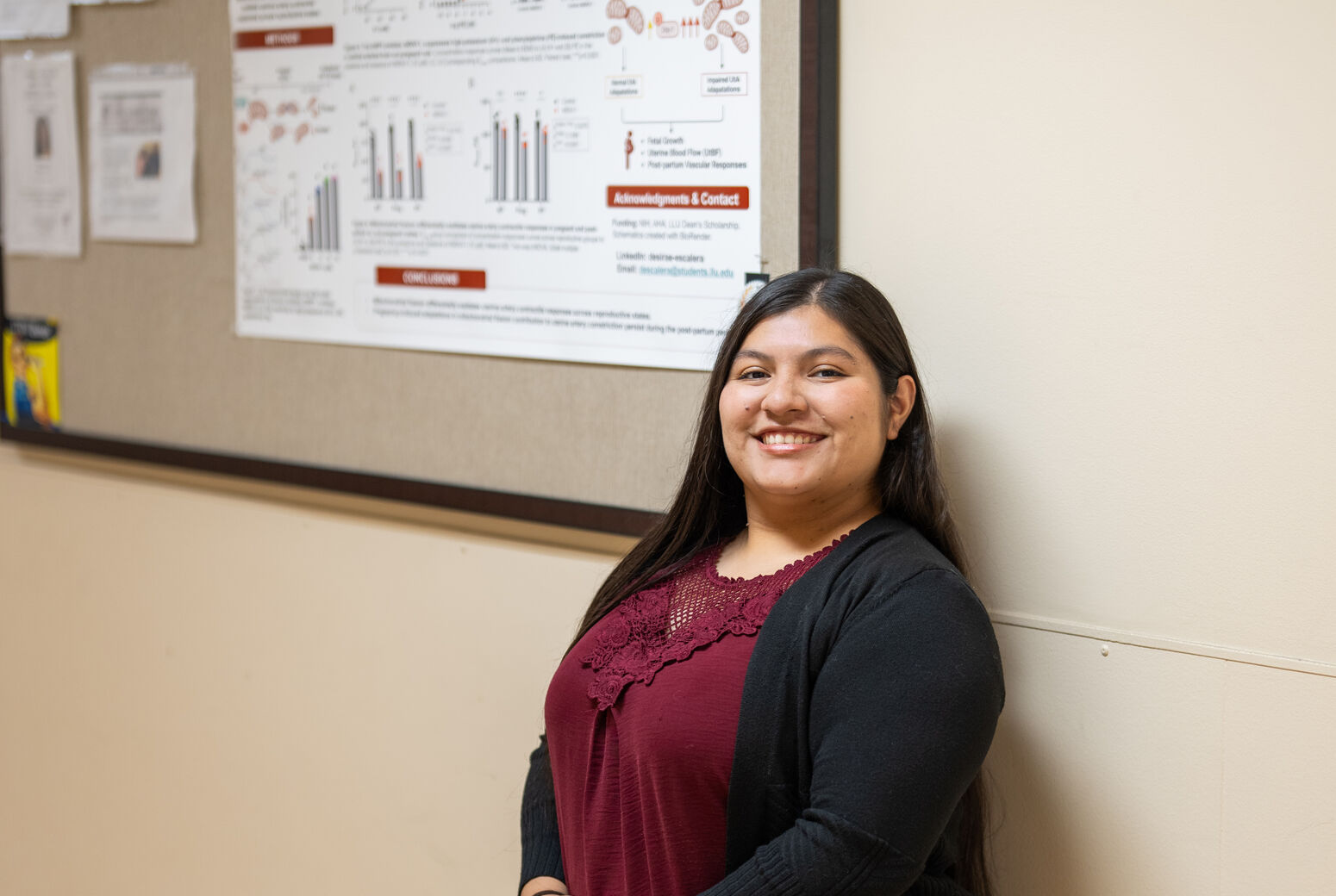
Congratulations to Desirae Escalera on successfully defending her dissertation proposal and completing her qualifying examinations! We are excited to welcome her as a PhD candidate and look forward to the discoveries ahead as she advances her research on mitochondrial dynamics and vascular function.
Desirae Presents at the American Physiological Society Summit 2026 in Minneapolis
We are incredibly proud of Desirae for presenting her research, "Mitochondrial Fission Differentially Regulates Uterine Artery Reactivity Across Reproductive States in Rats," at the 2026 American Physiological Society Summit. In recognition of the quality and impact of her work, she also received a Research Recognition Award from the APS Endocrinology and Metabolism Section. Congratulations, Desirae, on this well-deserved achievement!
Congratulations, Nataliia!
Congratulations to Dr. Nataliia Hula on the publication of her invited review in American Journal of Physiology-Heart and Circulatory Physiology! This comprehensive review highlights the emerging role of extracellular vesicles in preeclampsia and reflects Natasha's expertise and dedication to advancing our understanding of maternal vascular health. Hula N, Escalera D, Goulopoulou S. Extracellular vesicles in preeclampsia: drivers of vascular dysfunction and inflammation. Am J Physiol Heart Circ Physiol. 2025 Nov 5;329(6):H1560-H1574. doi: 10.1152/ajpheart.00584.2025.
Our Research Recognized as APS Select!
We are excited that our study, "Gestational Chronic Intermittent Hypoxia Triggers Maternal Inflammation and Disrupts Placental Stress Responses," was selected as an APS Select article by the American Physiological Society. This recognition highlights our team's work investigating how hypoxic stress during pregnancy alters maternal and placental physiology.
Citation: Gardner JJ, Oliveira da Silva RDN, Bradshaw JL, et al. Gestational chronic intermittent hypoxia triggers maternal inflammation and disrupts placental stress responses. Am J Physiol Cell Physiol. 2025 Jul 22;329(2):C630-C645. doi: 10.1152/ajpcell.00446.2025.